Shale & Unconventional Resources: The Technology That Rewrote the Map
For most of the twentieth century, the oil and gas trapped in shale was considered a curiosity — everyone knew it was there, and almost no one could produce it economically. Two techniques changed that, and with it, the balance of global energy.
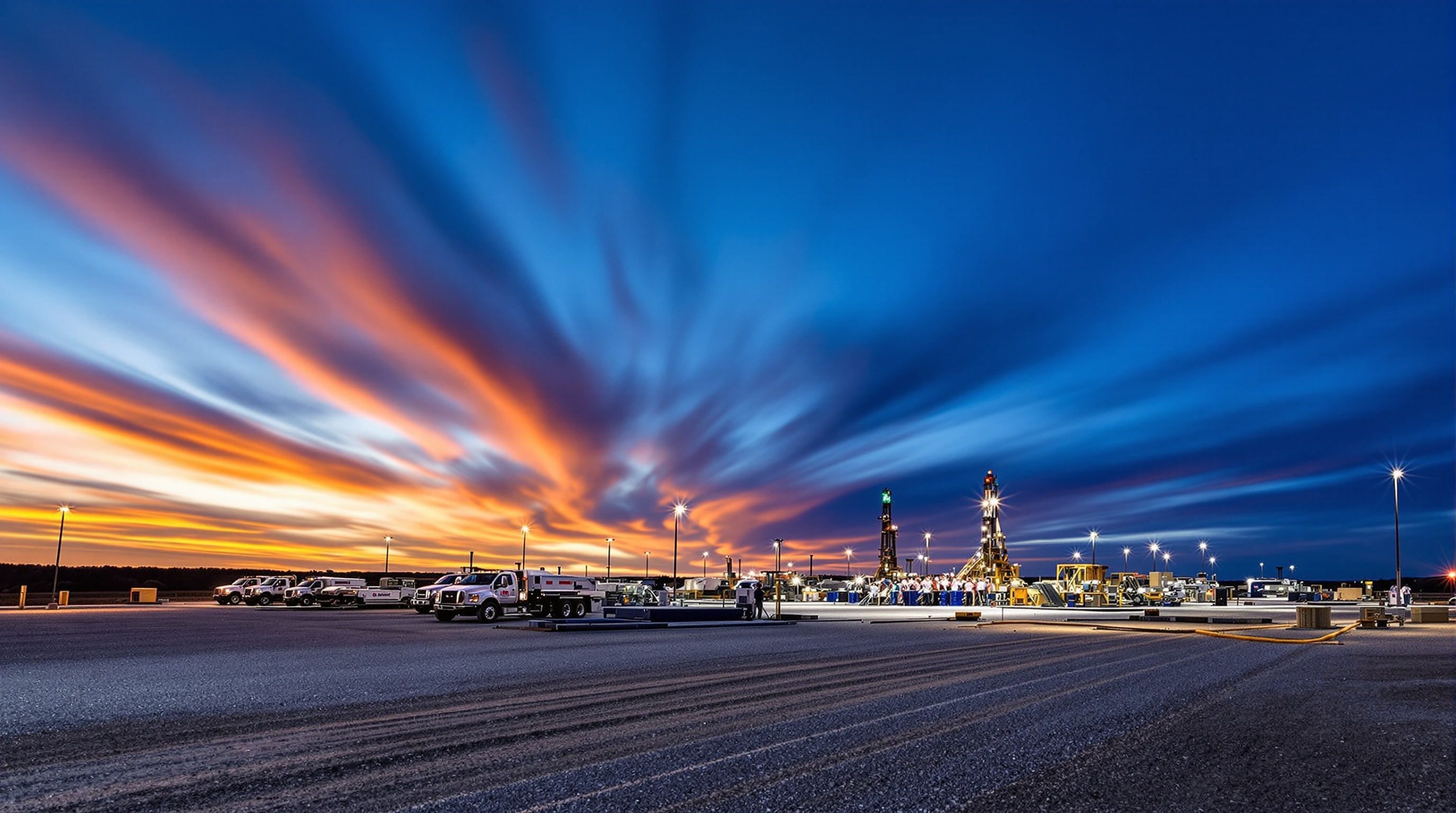
What makes a resource “unconventional”
Shale is a fine-grained rock with extremely low permeability. Hydrocarbons may be abundant within it, but the pore spaces are so tiny and poorly connected that oil and gas simply will not flow into a conventional vertical well at a useful rate. That is the defining feature of an unconventional resource: the hydrocarbons are present, but the rock will not give them up without engineering intervention. Tight sandstones and coalbed methane fall into the same broad family.
Horizontal drilling
The first breakthrough was learning to steer a well sideways. A modern well is drilled straight down to the target formation and then gradually turned until it runs horizontally through the shale layer, sometimes for two miles or more. Because shale beds are thin but laterally extensive, a horizontal wellbore contacts vastly more of the productive rock than a vertical hole ever could — the difference between poking a straw into a pancake from above versus threading it along the length of the pancake.
Hydraulic fracturing
The second breakthrough was creating pathways for the trapped hydrocarbons to escape. In hydraulic fracturing, often shortened to “fracking,” a fluid that is roughly 90% water, plus sand and a small percentage of chemical additives, is pumped into the horizontal section at high pressure. The pressure opens thin cracks in the rock. The sand — called proppant — wedges into those cracks and “props” them open after the pressure is released, leaving permanent channels through which oil and gas can flow to the well. Operators typically fracture the horizontal section in many separate stages along its length. Companies increasingly disclose the additives they use through registries such as FracFocus, the national hydraulic fracturing chemical registry.
Why it reshaped global energy
Combined, these methods turned the United States from a country of declining output into the world's largest oil and gas producer within about a decade. The EIA documents how shale gas went from a small share of U.S. supply to the dominant one. The consequences rippled outward: lower and more volatile natural gas prices, a surge in U.S. crude exports, a manufacturing edge from cheap feedstock, and a genuine shift in geopolitical leverage. Our basins guide shows exactly where this happened.
The decline curve
Unconventional wells behave differently from conventional ones. They tend to produce a strong initial burst that falls off steeply in the first year or two — a pattern called the decline curve. That means sustaining output requires continuously drilling new wells, which makes shale activity unusually responsive to price. When prices rise, rigs come back quickly; when they fall, drilling stalls. This responsiveness is why shale is sometimes described as the world's swing producer, and it is central to understanding energy markets.
Environmental questions, honestly stated
Unconventional development raises real concerns that deserve straight answers rather than slogans. The main issues are water use and disposal, the risk of methane leakage, induced seismicity from wastewater injection in some areas, and the surface footprint of intensive drilling. Regulators including the U.S. Environmental Protection Agency study these impacts, and industry practice has evolved — more water recycling, tighter well-integrity standards, and better leak detection. None of this makes the questions disappear, and we cover the broader picture in our energy transition primer.
The bottom line
Shale did not just add barrels; it changed how the industry thinks about supply, price, and speed. If the fundamentals in our oil and gas basics guide are the grammar of energy, shale is the plot twist that rewrote the story.