Natural Gas: The Quiet Giant of the Energy System
Natural gas rarely makes dramatic headlines, yet it heats homes, generates a large share of electricity, and feeds the chemical industry. Follow a molecule of methane from a mile underground to the burner on a stove and the modern energy system comes into focus.
What natural gas is
Natural gas is mostly methane, the simplest hydrocarbon, often mixed with heavier gases like ethane, propane, and butane, plus impurities such as water, carbon dioxide, and hydrogen sulfide. Gas that comes up with little liquid is called dry gas; gas rich in those heavier components is wet gas, and the extractable liquids are valuable natural gas liquids (NGLs). Some gas is produced on its own; some comes up alongside oil, where it is called associated gas.
Processing: cleaning the stream
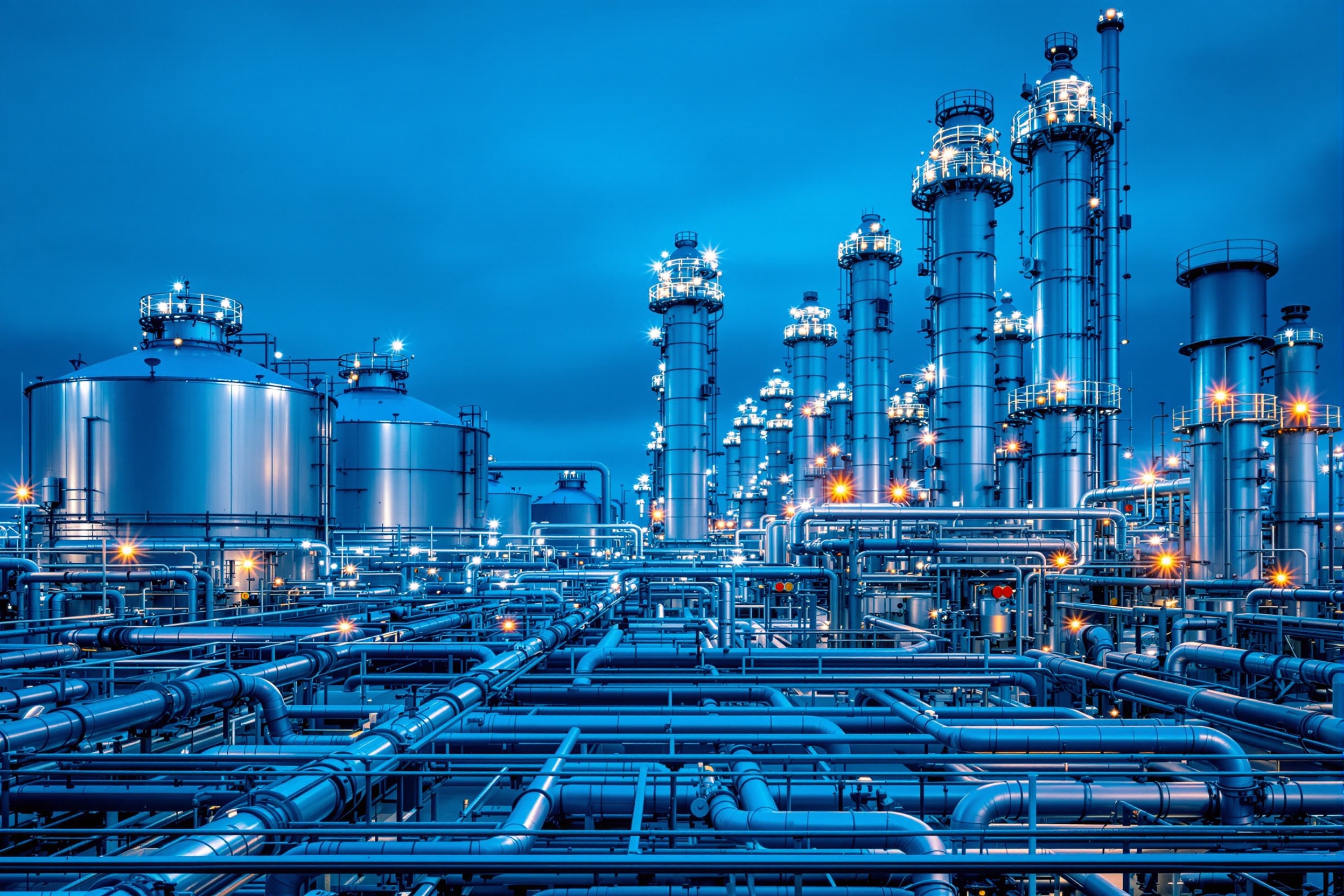
Raw gas cannot go straight into a pipeline. At a processing plant it is dried and stripped of impurities and NGLs until it meets pipeline specifications — essentially pure methane. The removed NGLs are sold separately as feedstocks and fuels. The result is the clean, odorless gas that utilities distribute; the familiar “rotten egg” smell is a safety odorant added later so leaks can be detected.
Moving gas: pipelines and storage
Most natural gas travels by an enormous network of underground pipelines, pushed along by compressor stations. Because demand swings with the seasons — heating in winter, power generation in summer — gas is injected into underground storage, often depleted reservoirs or salt caverns, during low-demand periods and withdrawn when needed. The EIA's natural gas overview maps how this delivery system fits together.
What gas is used for
Three big uses dominate. In power generation, gas-fired plants are flexible and relatively low-emitting compared with coal, which is why gas displaced much U.S. coal generation. In buildings, gas provides heat, hot water, and cooking. In industry, it is both a fuel and a raw material for fertilizer, plastics, and chemicals. Gas is also increasingly discussed as a partner to renewables, because flexible gas plants can fill in when wind and solar output dips — a theme in our energy transition primer.
LNG: turning a regional market global
Historically, gas markets were regional because gas is expensive to move across oceans. Liquefied natural gas (LNG) changed that. By chilling gas to about minus 260 degrees Fahrenheit, it condenses into a liquid roughly 1/600th of its gaseous volume, compact enough to ship. Export terminals liquefy it; import terminals warm it back into gas. The rise of U.S. LNG exports linked North American gas to Europe and Asia, so a cold snap or a supply disruption on one continent now ripples across the others. This is one reason gas prices have become more globally connected, as discussed in our energy markets guide.
The methane question
Natural gas burns cleaner than coal, but methane itself is a potent greenhouse gas when it leaks unburned. Reducing leakage across the system — wells, pipelines, and equipment — is one of the most cost-effective climate actions available, and it is a major focus of both regulators and operators. We treat this in more depth alongside the broader trade-offs in the energy transition section.
Why gas sits at the center
Abundant, flexible, and deeply embedded in heat, power, and industry, natural gas is the connective tissue of today's energy system — and a central character in every debate about where that system goes next. To understand where the gas comes from, revisit our oil and gas basics and the basins that supply it.