Oil & Gas Basics: Where Petroleum Comes From and How It Reaches You
Oil and natural gas are, at heart, ancient sunlight. Understanding how they form, where they collect, and how they are brought to the surface makes almost everything else about the energy industry easier to follow. This guide starts from zero.
What petroleum actually is
“Petroleum” is an umbrella term for hydrocarbons — molecules made mostly of hydrogen and carbon — that occur naturally underground. Crude oil is the liquid form; natural gas is the gaseous form, dominated by methane. Both begin as organic matter, chiefly microscopic marine plankton, that settled on ancient sea floors and was buried under layers of sediment over millions of years. Heat and pressure slowly “cooked” that organic material into hydrocarbons in a process geologists call maturation. As the U.S. Energy Information Administration explains, the specific temperature and depth largely determine whether you end up with oil, gas, or both.
Source, reservoir, and seal
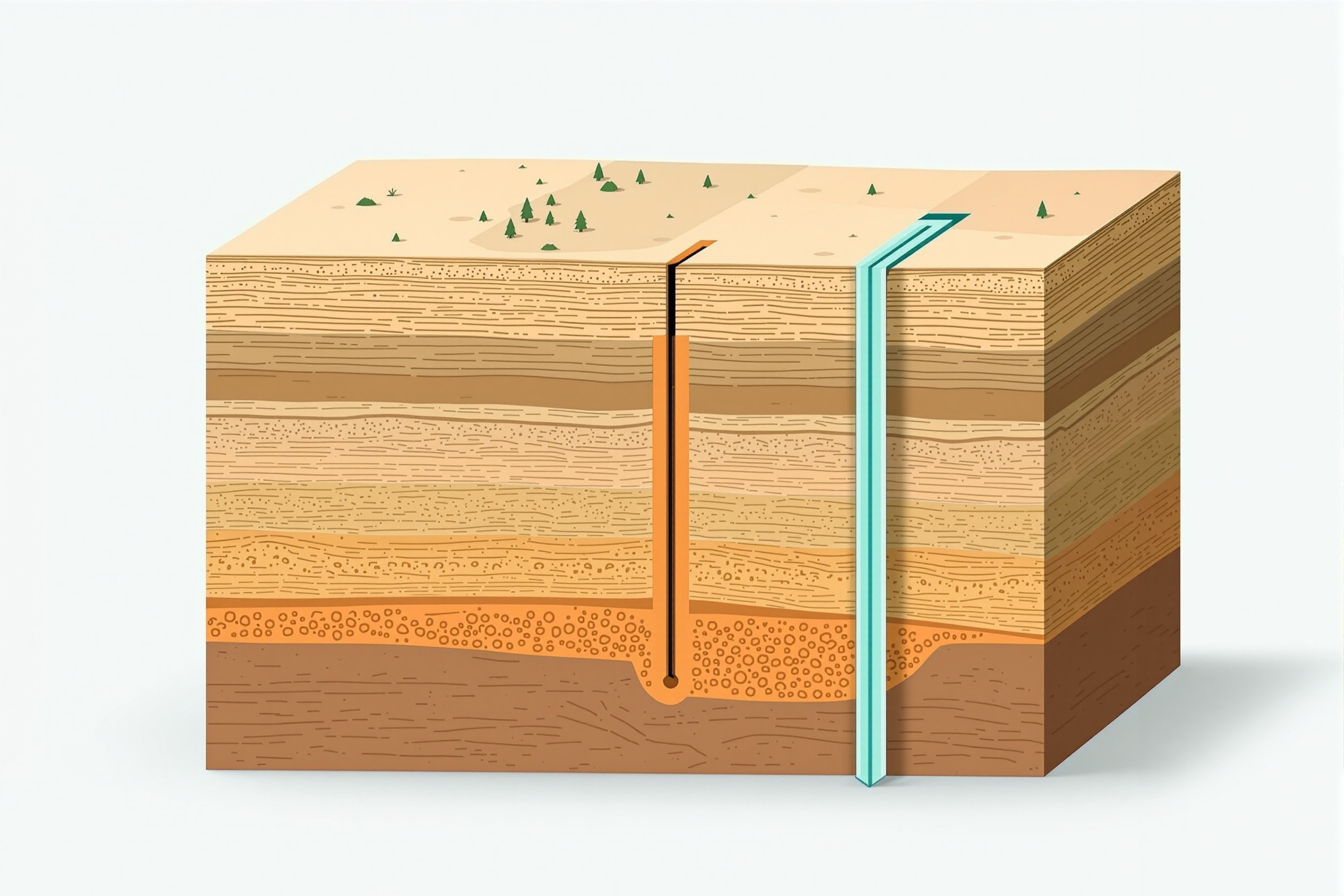
Three ingredients must line up for a conventional accumulation to exist. The source rock is the organic-rich layer where hydrocarbons form. Because oil and gas are lighter than the salty water that fills most rock pores, they migrate upward until they either reach the surface or get trapped. A reservoir rock — typically porous sandstone or limestone — is where they collect, held in tiny pore spaces like water in a sponge. Above it, an impermeable seal or cap rock, often shale or salt, stops the migration and holds everything in place. The shape that captures the hydrocarbons is called a trap.
A common misconception is that oil sits in vast underground lakes or caverns. In reality it is dispersed through solid rock, occupying pore spaces measured in fractions of a millimeter. How easily fluids move through that rock is called permeability, and it is one of the most important properties an engineer studies.
Why reservoir quality varies
Two rocks can contain similar amounts of pore space and still produce very differently. Porosity describes how much void space a rock has; permeability describes how readily those spaces connect and allow fluids to move. Grain size, cement between grains, natural fractures, pressure, and the properties of the fluids all affect that movement. This is why a reservoir is evaluated as a system rather than judged from a single core sample or map. Engineers combine well logs, core measurements, pressure data, and production tests to estimate how a formation may behave, then revise that picture as a well produces. The distinction also explains why some low-permeability rocks need additional engineering even when they contain substantial hydrocarbons.
Conventional versus unconventional
When the reservoir rock is porous and permeable enough that oil and gas flow to a well under their own pressure, geologists call the resource conventional. When the hydrocarbons are locked in rock so tight that they will not flow without help — most famously shale — the resource is unconventional. Producing unconventional resources requires the horizontal drilling and hydraulic fracturing techniques covered in our guide to shale and unconventional resources. The distinction is about the rock and the technology, not the quality of the oil itself.
From reservoir to refinery
Once a well is producing, the raw stream that comes up is rarely pure. It is usually a mixture of crude oil, natural gas, and salty water, sometimes with sand. Surface equipment separates these components. Crude oil is stabilized and sent by pipeline, rail, or tanker to a refinery, where it is distilled and processed into gasoline, diesel, jet fuel, and the feedstocks for plastics and chemicals. Natural gas is dried, cleaned, and moved through pipelines to homes, power plants, and industry — a journey detailed in our natural gas explainer. The produced water is treated and disposed of or recycled.
The vocabulary of volume
The industry measures oil in barrels (one barrel is 42 U.S. gallons) and natural gas in cubic feet, often in thousands (mcf) or millions (mmcf). To compare the two, analysts convert gas into a barrel of oil equivalent (boe) based on energy content. You will also hear about reserves — the portion of a resource that can be produced economically with today's technology and prices — and production, the actual flow over a period of time. Our glossary keeps these straight.
Why the basics matter
Almost every energy headline — a price spike, a new pipeline, a drilling boom, a debate about emissions — makes more sense once you can picture the source rock, the reservoir, and the trip to market. With the fundamentals in hand, the natural next step is to see how a project actually gets built. Continue with the exploration and production lifecycle, or zoom out to where the major U.S. basins are.